WHAT DO YOU HAVE IN YOUR HEAD?
Complete series in four chapters
Amar Duque · 2025
Introduction
This series arises from a simple yet abyssal question: what do we truly have in our heads?
Each work is a window into the feminine inner world, where thoughts are not abstractions but living presences that take the form of flowers, houses, stars, or animals. They are energies that grow, watch, repeat, or bloom within the mental space.
“What do you have in your head?” is a journey through the landscapes of the mind—its fertility, its weight, its restless beauty.
These images reveal how every thought becomes symbolic matter, and how the feminine mind can be at once a garden, a mirror, a cosmos, or a home.
Ultimately, this series speaks about the power of imagination and what happens when thoughts cease to be noise and become visual language: a map of the invisible.
General Technical Sheet
Year: 2025
General technique: Watercolor with digital retouch
Format: Series composed of four chapters, three works per chapter
Artist: Amar Duque
Chapter I – The Inner Garden
In this first part, thoughts manifest as flowers, stars, or symbolic animals.
The inner garden is the territory where the mind blooms without fear: each idea becomes color, each emotion a petal.
Here, poppies are lucid dreams, stars are thoughts seeking meaning, and the white cat is intuition guarding the mystery.

Garden of Poppies
A woman holds a garden of open poppies on her head. The flowers represent thoughts that sprout from imagination—fleeting and luminous. Each petal is an idea that is born and dissolves into the air.
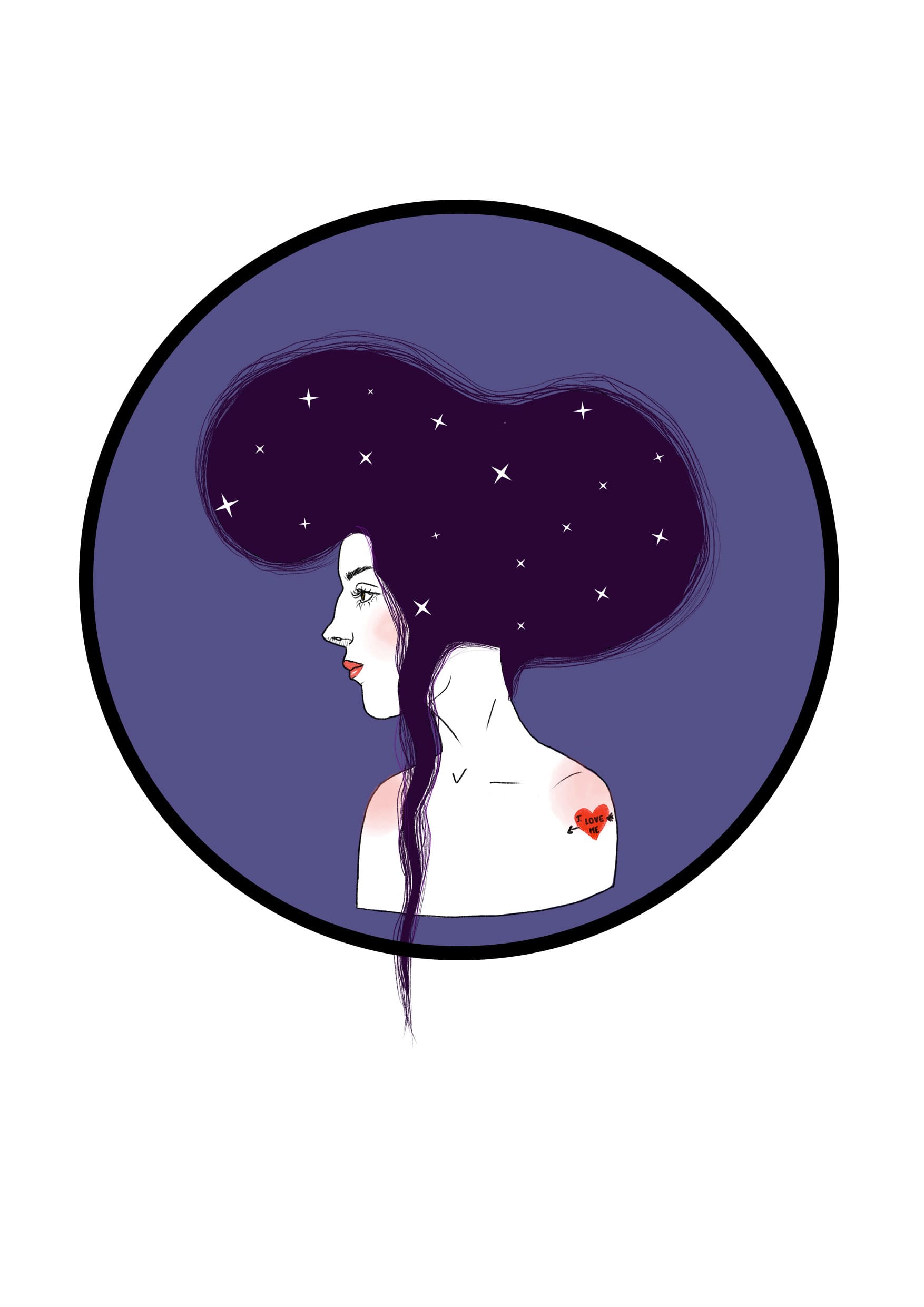
Starry Night
Her hair turns into a night sky full of constellations. Thoughts orbit freely, reminding us that the mind is also a moving cosmos.
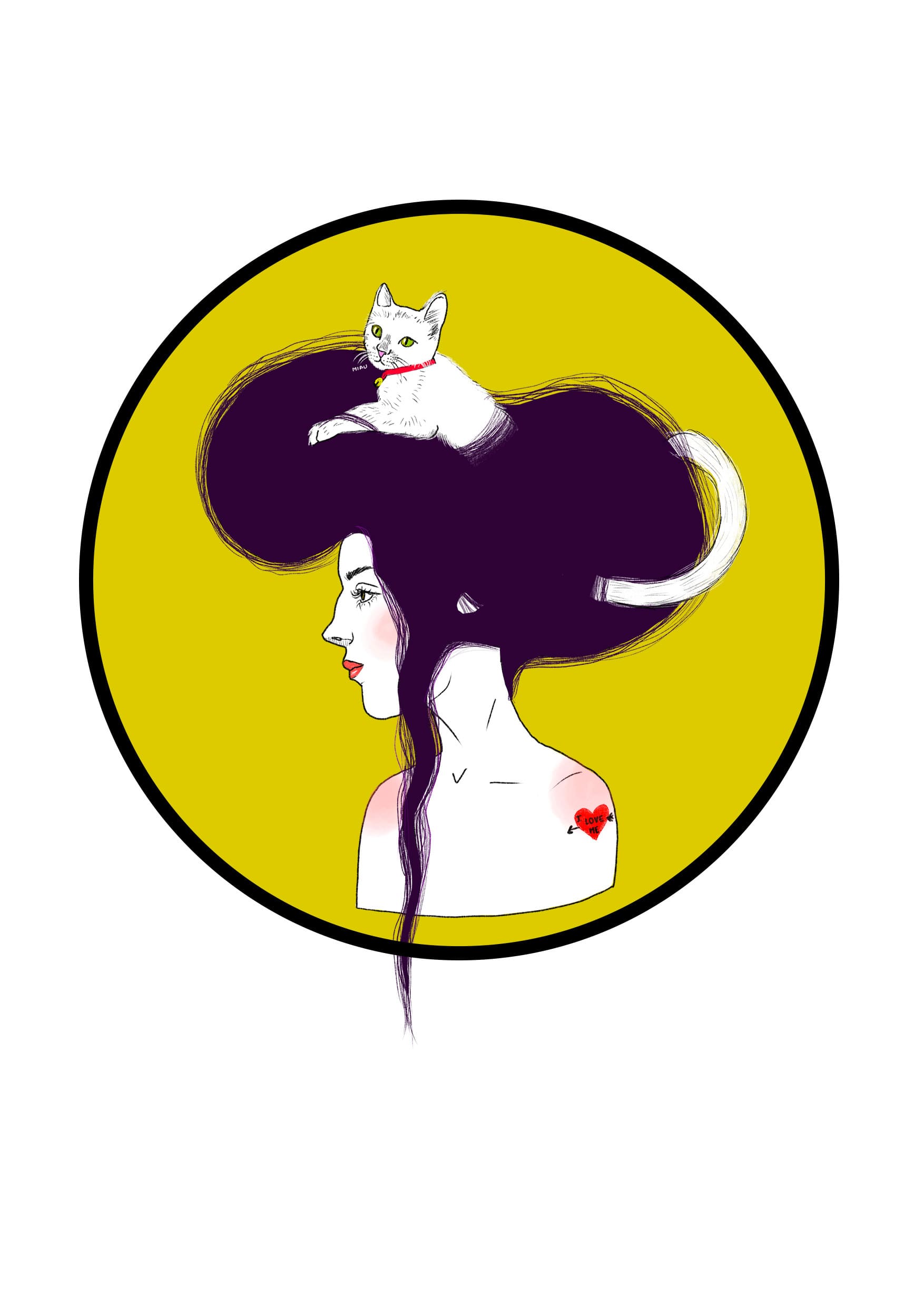
The White Cat
From her head emerges the silhouette of a white cat: intuition, instinct, and silent wisdom. It represents the mind that feels before it thinks.
Chapter II – Under the Gaze of Thought
In this chapter, the mind observes itself.
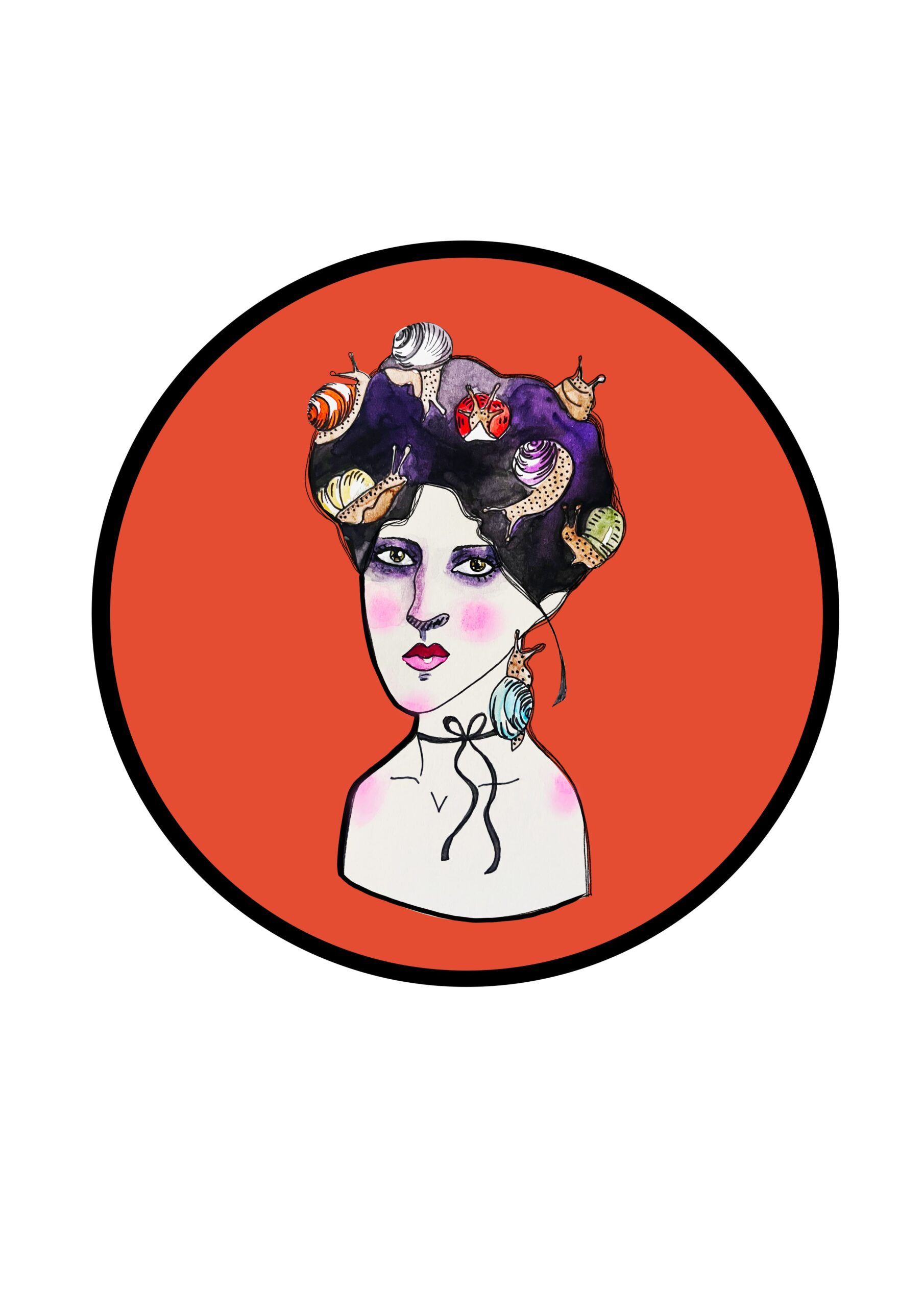
Thoughts watch, crawl, or bloom. Each figure embodies a distinct way of inhabiting her own thought: vigilance, slowness, or defense.
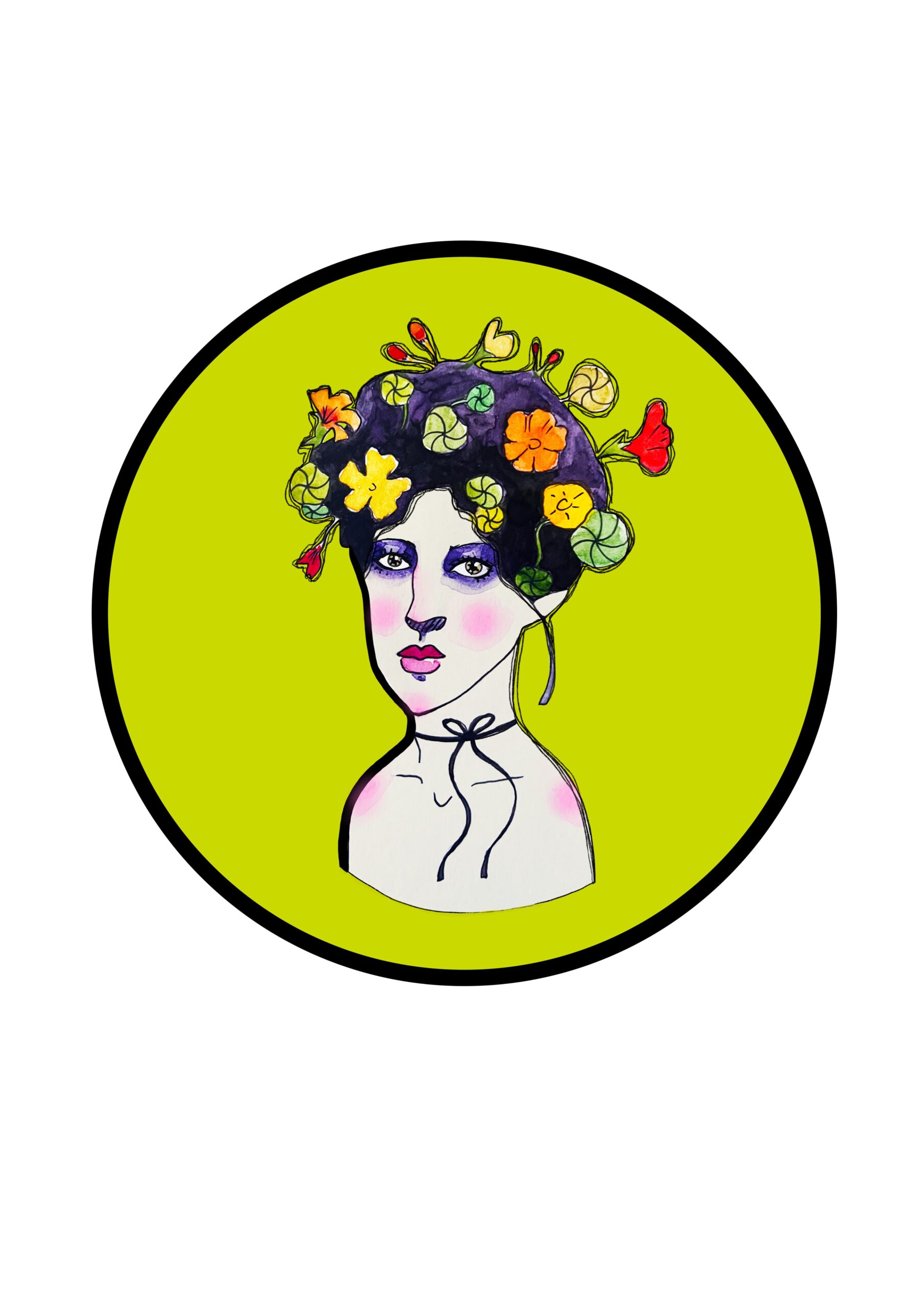
Nasturtium flowers burn like mental fire—the energy that turns fear into courage and blooming in the light of others’ gaze.
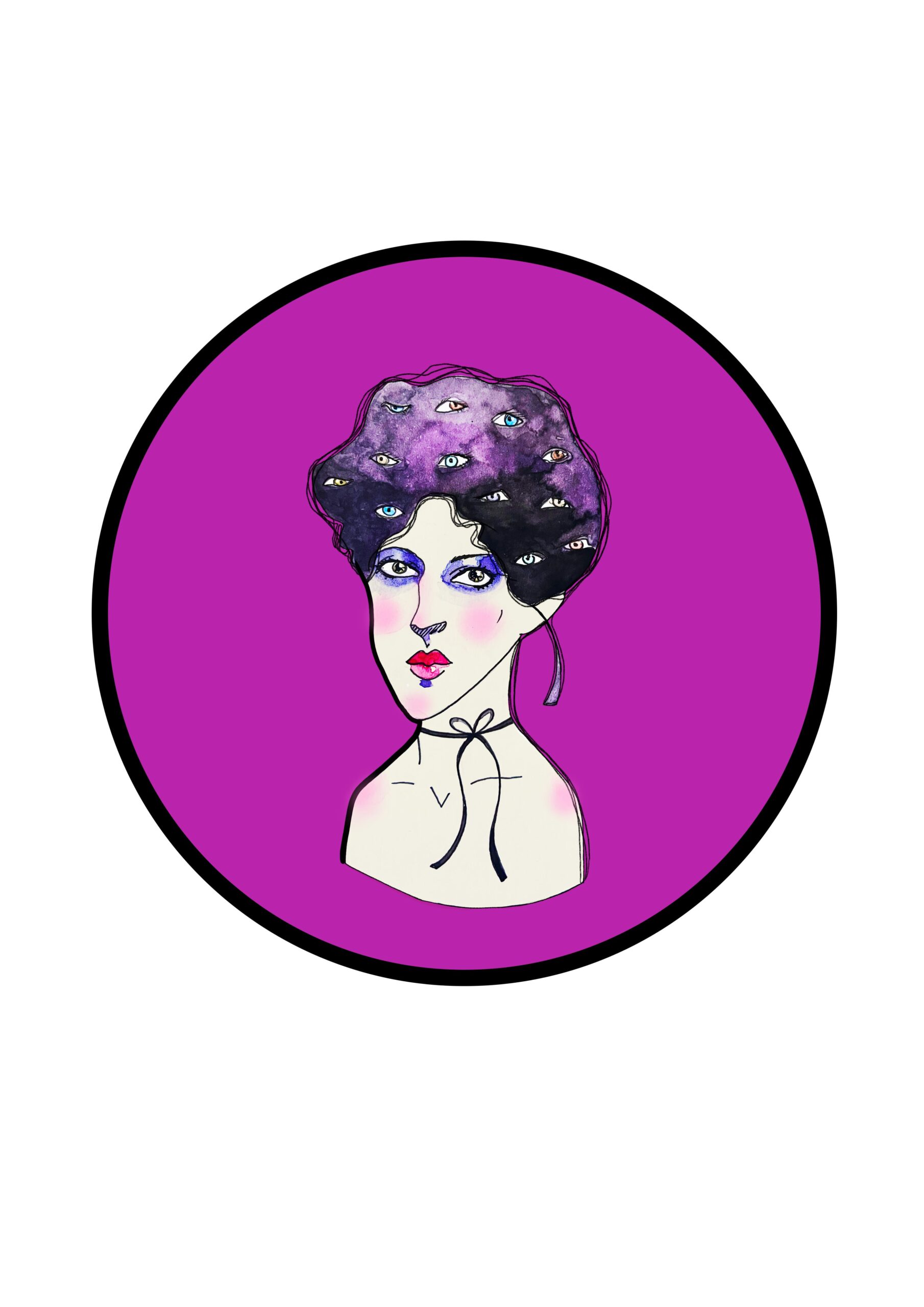
She Who Knows She Is Watched
Hair populated with eyes. A vigilant mind that fears being seen and, at the same time, cannot stop looking at itself. Each eye represents an inner voice, an external expectation turned inward.
She Who Carries Time in Her Head
Snails that slowly crawl among her thoughts. The woman bears the weight of unfinished processes—mental loops that spin without end.
She Who Blooms Under the Gaze
Orange nasturtiums sprout from her hair like thoughts of fire. She represents the mind that chooses to bloom despite judgment, transforming vigilance into expression.
Chapter III – Mental Universes
Thought as cosmos, expansion, and obsession.
Here the mind creates systems, orbits, and creatures of its own universe.
Each piece represents a way of thinking: inner balance, vital expansion, and the thought that repeats to exhaustion.
Solar System
The sun in her chest and the planets around her head. The mind as a balanced system of forces, where each thought is a star with its own rhythm.
Growing Thoughts
A vine of flowers extends from her head. Thoughts are life that intertwines, grows, and seeks its own air.
The Moths
Dozens of moths flutter above her head—obsessive, insistent thoughts drawn to the same light. They represent the mind that cannot stop its inner flight.
Chapter IV – Architectures of the Mind
In this final chapter, the mind becomes refuge, temple, or cycle.
The figures build their own inner space: an imaginary house, a garden of calm, or a lunar sky.
Each work is an emotional architecture where thought turns into matter.
The Inner House
A woman has built a world within herself: a palace made of memories and desires. It represents thought as a symbolic dwelling.
Lotus
Flowers that emerge serenely over the mental waters. They are purified thoughts—the calm that arrives after the inner storm.
Lunar Phases
Her hair contains all the phases of the moon. The mind as an emotional, changing, feminine cycle—mother of its own light.
Epilogue – From Pixel to Pulse
The shift from digital to watercolor is not technical but vital.
For years, Amar Duque built precise mental universes, where each form was an idea and each line an ordered thought.
But the body—the water, the breath, the skin of paper—began to demand presence.
Watercolor appeared as living matter, as a way to feel again what the digital stroke could only recall.
Today her work embodies that transition: from mental clarity to sensitive tremor, from symbol to breath.
It is not about abandoning the digital, but about allowing emotion to once again moisten thought.
Each diluted pigment is a surrender: a way of saying, “I no longer wish to control everything; I wish to inhabit it all.”